

Hey there! As a supplier of Reciprocating Vacuum Pumps, I often get asked about the power consumption of these nifty machines. So, I thought I'd take a deep dive into this topic and share some insights with you.
First off, let's understand what a reciprocating vacuum pump is. A reciprocating vacuum pump is a type of positive - displacement pump. It works by using a piston that moves back and forth (reciprocates) inside a cylinder. This movement creates a change in volume, which in turn causes the suction and discharge of gas, creating a vacuum.
Now, onto the main question: what's the power consumption of a reciprocating vacuum pump? Well, it's not a one - size - fits - all answer. The power consumption of a reciprocating vacuum pump depends on several factors.
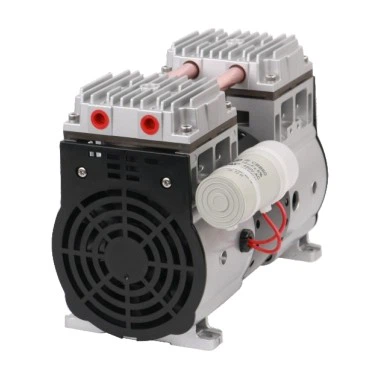

1. Pump Size and Capacity
The size of the pump plays a huge role. Larger pumps with higher capacities generally consume more power. Think of it like a car engine. A big V8 engine in a truck is going to use more fuel (or in this case, electricity) than a small 4 - cylinder engine in a compact car. A pump that's designed to handle a large volume of gas per minute needs more power to move that gas. For example, if you're using a reciprocating vacuum pump in an industrial setting where you need to evacuate a large chamber quickly, you'll likely go for a bigger pump, and that'll draw more power.
2. Operating Pressure
The desired operating pressure also affects power consumption. If you're aiming for a very high vacuum (low pressure), the pump has to work harder. It's like trying to suck all the air out of a sealed container. The lower the pressure you want to achieve, the more energy the pump needs to keep removing the gas molecules. So, if your application requires a deep vacuum, expect the power consumption to be on the higher side.
3. Efficiency of the Pump
The efficiency of the pump itself is another crucial factor. A well - designed and maintained pump will use less power to achieve the same level of vacuum compared to an inefficient one. Over time, wear and tear can reduce a pump's efficiency. Things like worn - out pistons, leaky valves, or poor lubrication can make the pump work harder, thus increasing power consumption. Regular maintenance and using high - quality parts can help keep the pump running efficiently.
Let's talk about some real - world scenarios. In a small laboratory setting, a reciprocating vacuum pump might be used to create a vacuum for a simple experiment. These pumps are usually smaller in size and don't need to achieve extremely low pressures. So, their power consumption is relatively low, maybe in the range of a few hundred watts.
On the other hand, in a large manufacturing plant, reciprocating vacuum pumps are used for tasks like vacuum distillation or degassing of large volumes of liquids. These pumps are much bigger and need to operate at specific pressures for long periods. As a result, their power consumption can be several kilowatts.
If you're in the market for a reciprocating vacuum pump, you might also be interested in other types of pumps we offer. Check out our Portable Vacuum Pumps for Milking Cows. These pumps are designed for a very different application but still offer the same reliability and performance as our reciprocating pumps. And if you need a pump that can handle negative pressure, take a look at our Negative Pressure Vacuum Pump.
Of course, our main focus is the Reciprocating Vacuum Pump. We've been in the business for a long time, and we know how to make pumps that are not only powerful but also energy - efficient. We use the latest technology and high - quality materials to ensure that our pumps give you the best performance while keeping power consumption in check.
When it comes to calculating the power consumption of a reciprocating vacuum pump, there are some formulas and methods. But in general, it's best to consult with an expert. We have a team of experienced engineers who can help you determine the exact power consumption based on your specific requirements.
If you're worried about high power bills, there are some things you can do. First, make sure the pump is properly sized for your application. Don't go for a much larger pump than you actually need. Second, keep the pump well - maintained. Regularly check and replace worn parts, and make sure the pump is lubricated correctly. Third, consider using energy - saving features if available. Some of our pumps come with variable speed drives that can adjust the power consumption based on the actual demand.
In summary, the power consumption of a reciprocating vacuum pump is influenced by its size, operating pressure, and efficiency. By understanding these factors, you can make an informed decision when choosing a pump. And if you have any questions or need more information, don't hesitate to reach out to us. We're here to help you find the perfect pump for your needs. Whether you're a small business owner or a large industrial manufacturer, we've got the right solution for you.
If you're interested in purchasing a reciprocating vacuum pump or want to discuss your requirements further, we're ready to have a chat. Let's talk about how we can meet your vacuum - pumping needs and help you save on energy costs at the same time.
References
- Perry, R. H., & Green, D. W. (1997). Perry's Chemical Engineers' Handbook (7th ed.). McGraw - Hill.
- ASHRAE Handbook: HVAC Systems and Equipment. (2016). American Society of Heating, Refrigerating and Air - Conditioning Engineers.