

The rotation direction of a pump plays a crucial role in determining its performance, and this is especially true for oil - type rotary vane pumps. As a supplier of oil - type rotary vane pumps, I have witnessed firsthand how the rotation direction can have a significant impact on various aspects of pump operation.
1. Fundamentals of Oil - Type Rotary Vane Pumps
Oil - type rotary vane pumps are positive - displacement pumps widely used in many industries, including laboratories, manufacturing, and chemical processing. These pumps work by using rotating vanes within a cylindrical chamber. As the rotor turns, the vanes slide in and out of slots in the rotor, creating changing volumes that draw in and expel fluids or gases.
The basic principle of operation relies on the correct interaction between the vanes, the rotor, and the chamber walls. When the pump rotates, the vanes create a seal against the chamber walls, allowing for the effective transfer of the medium being pumped.
2. Impact on Flow Rate
The rotation direction directly affects the flow rate of the pump. In a properly functioning oil - type rotary vane pump, the designed rotation direction is optimized to ensure maximum flow. When the pump rotates in the correct direction, the vanes move in a coordinated manner to draw in the fluid or gas at the inlet and push it out at the outlet.
If the pump rotates in the wrong direction, the flow rate can be severely reduced. The vanes may not create an effective seal, leading to leakage of the medium back into the inlet side. This not only reduces the overall flow but also increases the energy consumption of the pump as it tries to overcome the inefficiencies.
For example, in a Value 2 Stage Vacuum Pump, which is designed for high - performance vacuum applications, the correct rotation direction is essential to achieve the desired flow rate and vacuum level. Incorrect rotation can result in a failure to reach the required vacuum, which is critical in applications such as vacuum distillation or freeze - drying.
3. Impact on Vacuum Performance
In vacuum applications, the rotation direction is of utmost importance. Oil - type rotary vane pumps are commonly used to create and maintain a vacuum environment. The correct rotation direction allows the pump to remove air or other gases from the system effectively.
When the pump rotates in the wrong direction, the ability to create a vacuum is compromised. The vanes may not be able to expel the gases properly, leading to a higher residual pressure in the system. This can be a significant problem in applications where a high - quality vacuum is required, such as in semiconductor manufacturing or electron microscopy.

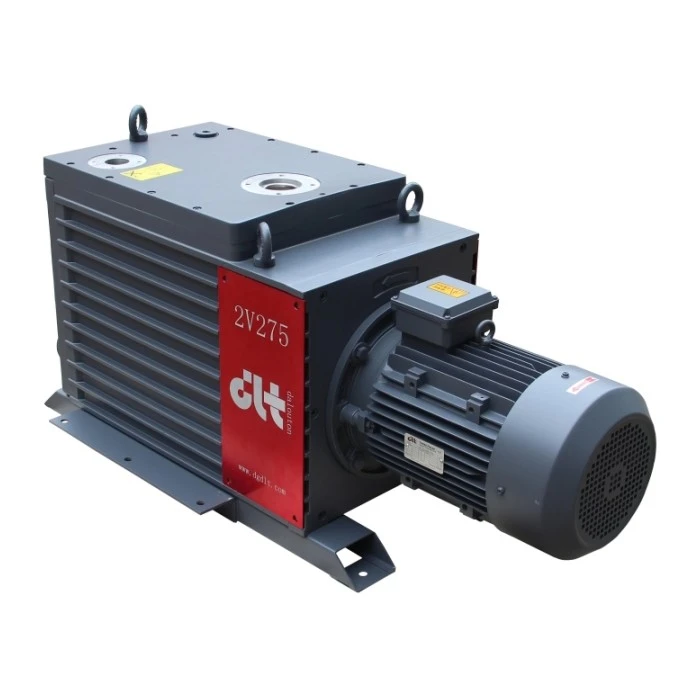
A Portable Vacuum Pump for Laboratory Use is often used in scientific research. If the rotation direction is incorrect, it may not be able to achieve the necessary vacuum level for experiments, which can lead to inaccurate results.
4. Impact on Pump Efficiency
Pump efficiency is another area where the rotation direction has a major impact. A pump operating in the correct rotation direction can convert the input energy into useful work more effectively. The vanes move smoothly, creating a consistent and efficient pumping action.
When the rotation direction is wrong, the pump has to work harder to achieve the same output. This leads to increased energy consumption and reduced overall efficiency. Over time, this can result in higher operating costs and more wear and tear on the pump components.
For instance, in a Single - stage Rotary Vane Vacuum Pump, incorrect rotation can cause the vanes to rub against the chamber walls in an inefficient way, generating more heat and reducing the pump's lifespan.
5. Impact on Pump Lifespan
The rotation direction also affects the lifespan of the pump. A pump operating in the correct direction experiences less stress on its components. The vanes, rotor, and other parts are designed to work in a specific way when the pump rotates in the intended direction.
When the rotation direction is incorrect, the vanes may not slide smoothly in and out of the slots, causing excessive wear. This can lead to premature failure of the vanes, which are a critical part of the pump. Additionally, the incorrect rotation can cause uneven pressure distribution within the pump, leading to damage to the chamber walls and other internal components.
6. How to Ensure Correct Rotation
To ensure that the pump rotates in the correct direction, it is essential to follow the manufacturer's instructions. Most oil - type rotary vane pumps have clear markings indicating the correct rotation direction. Before starting the pump, it is important to double - check these markings.
In some cases, the power supply to the pump motor may need to be adjusted to ensure the correct rotation. This may involve reversing the electrical connections, but this should only be done by a qualified technician to avoid electrical hazards.
7. Conclusion and Call to Action
In conclusion, the rotation direction of an oil - type rotary vane pump has a profound impact on its performance, including flow rate, vacuum performance, efficiency, and lifespan. As a supplier of these pumps, we understand the importance of providing high - quality products and ensuring that our customers use them correctly.
If you are in the market for an oil - type rotary vane pump or need more information about the impact of rotation direction on pump performance, we encourage you to contact us. Our team of experts is ready to assist you in selecting the right pump for your specific needs and providing guidance on proper installation and operation.
References
- [Author's name]. "Principles of Positive - Displacement Pumps." [Publisher], [Year].
- [Author's name]. "Vacuum Technology Handbook." [Publisher], [Year].