

As a supplier of Rotary Piston Vacuum Pumps, I am often asked about the cooling methods for these essential pieces of equipment. Understanding the cooling mechanism is crucial for ensuring the optimal performance and longevity of a rotary piston vacuum pump. In this blog, I will delve into the various cooling methods used for rotary piston vacuum pumps, their advantages, and how they contribute to the overall efficiency of the pump.
Why Cooling is Necessary
Before we explore the cooling methods, it's important to understand why cooling is necessary for a rotary piston vacuum pump. During operation, the pump generates heat due to friction between moving parts and the compression of gas. If this heat is not properly dissipated, it can lead to several issues. High temperatures can cause the lubricating oil to break down, reducing its effectiveness and potentially leading to increased wear and tear on the pump components. Additionally, excessive heat can cause thermal expansion of the pump parts, which may result in misalignment and reduced pumping efficiency. Overheating can also shorten the lifespan of the pump and increase the risk of breakdowns, leading to costly repairs and downtime.

Air Cooling
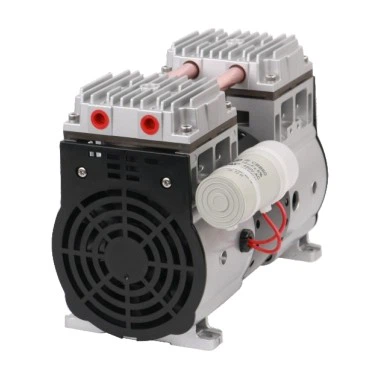
One of the most common cooling methods for rotary piston vacuum pumps is air cooling. Air-cooled pumps are designed with fins or cooling ribs on the outer surface of the pump housing. These fins increase the surface area of the pump, allowing for better heat transfer to the surrounding air. As the pump operates, a fan or blower is used to force air over the fins, carrying away the heat generated by the pump.
The main advantage of air cooling is its simplicity and cost-effectiveness. Air-cooled pumps do not require a separate cooling system, such as a water circulation system, which reduces the initial investment and maintenance costs. They are also more portable and easier to install, making them suitable for applications where space is limited or where a water supply is not readily available.
However, air cooling has its limitations. The cooling efficiency of air-cooled pumps is highly dependent on the ambient temperature and air flow. In hot environments or areas with poor ventilation, the cooling capacity of the pump may be reduced, leading to higher operating temperatures. Additionally, air-cooled pumps may produce more noise compared to water-cooled pumps due to the operation of the fan or blower.
Water Cooling
Water cooling is another popular method for cooling rotary piston vacuum pumps. In a water-cooled system, water is circulated through a cooling jacket or coil surrounding the pump housing. As the water flows through the cooling channels, it absorbs the heat generated by the pump and carries it away. The heated water is then typically sent to a heat exchanger, where it is cooled before being recirculated back to the pump.
Water cooling offers several advantages over air cooling. Water has a higher heat capacity than air, which means it can absorb more heat per unit volume. This allows water-cooled pumps to operate at lower temperatures, even in high-demand applications. Water cooling also provides more consistent cooling performance, regardless of the ambient temperature or air flow conditions. Additionally, water-cooled pumps tend to be quieter than air-cooled pumps since there is no need for a noisy fan or blower.
However, water cooling systems are more complex and expensive to install and maintain compared to air cooling systems. They require a reliable water supply and a proper drainage system to ensure the continuous flow of water. In some cases, additional equipment such as water pumps, filters, and heat exchangers may be required, increasing the overall cost and complexity of the system.
Oil Cooling
In addition to air and water cooling, some rotary piston vacuum pumps use oil cooling. In an oil-cooled system, the lubricating oil in the pump also serves as a coolant. As the oil circulates through the pump, it absorbs the heat generated by the moving parts and carries it to an oil cooler. The oil cooler, which can be either air-cooled or water-cooled, removes the heat from the oil before it is recirculated back to the pump.
Oil cooling offers several benefits. The oil provides both lubrication and cooling, which helps to reduce friction and wear on the pump components. It also helps to maintain a stable operating temperature, which is important for the performance and reliability of the pump. Oil-cooled pumps are often used in applications where high vacuum levels and continuous operation are required.
However, oil cooling systems require regular maintenance to ensure the proper functioning of the oil cooler and the quality of the lubricating oil. The oil needs to be changed periodically to prevent the buildup of contaminants and to maintain its cooling and lubricating properties.
Hybrid Cooling Systems
In some cases, a combination of cooling methods may be used to achieve the best cooling performance. For example, a pump may use both air and water cooling. The air cooling can provide initial cooling, while the water cooling can be used to further reduce the temperature in high-demand situations. Hybrid cooling systems can offer the advantages of both air and water cooling, such as cost-effectiveness, portability, and high cooling efficiency.
Choosing the Right Cooling Method
When choosing a cooling method for a rotary piston vacuum pump, several factors need to be considered. The first factor is the application requirements. If the pump is used in a small-scale or portable application, air cooling may be the most suitable option due to its simplicity and cost-effectiveness. On the other hand, if the pump is used in a large-scale industrial application where high vacuum levels and continuous operation are required, water cooling or oil cooling may be more appropriate.
The ambient conditions also play an important role in the choice of cooling method. In hot and humid environments, water cooling may be more effective than air cooling since air cooling may be limited by the high ambient temperature. Additionally, the availability of a water supply and the cost of water need to be considered when choosing a water-cooled system.
The budget is another important factor. Air-cooled pumps are generally less expensive to purchase and maintain compared to water-cooled or oil-cooled pumps. However, the long-term operating costs, such as energy consumption and maintenance costs, also need to be taken into account.
Conclusion
In conclusion, the cooling method for a rotary piston vacuum pump is an important consideration for ensuring its optimal performance and longevity. Air cooling, water cooling, oil cooling, and hybrid cooling systems each have their own advantages and disadvantages. By understanding the different cooling methods and considering the application requirements, ambient conditions, and budget, you can choose the most suitable cooling method for your rotary piston vacuum pump.
If you are in the market for a Rotary Piston Vacuum Pump or have any questions about the cooling methods or other aspects of our products, we encourage you to [contact us for a detailed discussion and procurement negotiation]. Our team of experts is ready to assist you in finding the right solution for your specific needs.
References
- "Vacuum Technology Handbook" by O'Hanlon, J. F.
- "Practical Vacuum Technology" by Lafferty, J. M.