

Alright folks, today I wanna chat about something that's super important when it comes to vacuum transfer pumps: their flow rate capabilities. As a supplier of vacuum transfer pumps, I've seen firsthand how crucial it is to understand these flow rates for different applications.
What is Flow Rate in a Vacuum Transfer Pump?
First off, let's get the basics down. Flow rate in a vacuum transfer pump refers to the volume of gas or fluid that the pump can move from one place to another within a specific period of time. It's usually measured in cubic feet per minute (CFM) or liters per second (L/s). You can think of it like the speed at which a water hose can pour out water. The higher the flow rate, the more gas or fluid the pump can handle.
Factors Affecting Flow Rate
There are a bunch of things that can impact the flow rate of a vacuum transfer pump. The type of pump is a major factor. For example, a Rotary Piston Vacuum Pump has a different flow rate characteristic compared to a Negative Pressure Vacuum Pump.
The design of the pump plays a big role. Pumps with larger chambers or more efficient mechanisms can generally achieve higher flow rates. The size of the inlet and outlet ports also matters. If the ports are too small, it can restrict the flow of gas or fluid, reducing the overall flow rate.
The pressure difference between the inlet and the outlet of the pump is another key factor. The greater the pressure difference, the higher the flow rate. But there are limits to how much pressure difference a pump can handle. If the pressure difference is too large, it can cause the pump to work too hard, leading to overheating or other issues.
The viscosity of the gas or fluid being pumped also affects the flow rate. Thicker fluids or gases with higher viscosities are more difficult to move, so the pump may have a lower flow rate when dealing with them.
Different Applications and Required Flow Rates
Now, let's talk about how different applications require different flow rates. In industrial settings, like chemical manufacturing, high flow rates are often needed. For example, when transferring large volumes of chemicals from one storage tank to another, a pump with a high flow rate can get the job done quickly and efficiently. A pump with a flow rate of 50 CFM or more might be suitable for such applications.
In the medical field, vacuum transfer pumps are used in various equipment. For instance, in a negative pressure wound therapy system, the flow rate needs to be carefully controlled. A lower and more stable flow rate, maybe around 5 - 10 L/s, is often required to ensure proper treatment without causing any damage to the wound.
If you're in the dairy industry and using Portable Vacuum Pumps for Milking Cows, the flow rate requirements are different again. The pump needs to be able to create a consistent vacuum to milk the cows effectively, but the flow rate doesn't need to be extremely high. A flow rate in the range of 10 - 20 CFM is usually sufficient.
How to Choose the Right Flow Rate for Your Needs
When you're looking to buy a vacuum transfer pump, choosing the right flow rate is crucial. First, you need to determine the volume of gas or fluid that you need to transfer within a certain time frame. This will give you a rough idea of the minimum flow rate you require.
Next, consider the operating conditions. If you're working with a highly viscous fluid or in a high-pressure environment, you may need a pump with a higher flow rate to compensate for these factors.

It's also a good idea to leave some room for future expansion or changes in your operations. You don't want to be stuck with a pump that can't handle increased demand down the line. So, it might be wise to choose a pump with a slightly higher flow rate than your current needs.
Our Vacuum Transfer Pumps and Their Flow Rate Capabilities
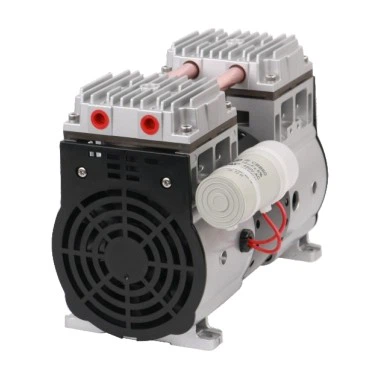
As a supplier of vacuum transfer pumps, we offer a wide range of pumps with different flow rate capabilities. Our Rotary Piston Vacuum Pump is a great option for applications that require a relatively high flow rate. It can achieve flow rates of up to 100 CFM, making it suitable for large-scale industrial processes.
Our Negative Pressure Vacuum Pump is designed for applications where a more precise and stable flow rate is needed. It can provide a consistent flow rate in the range of 3 - 15 L/s, making it ideal for medical and laboratory use.
And our Portable Vacuum Pumps for Milking Cows are specifically engineered to meet the flow rate requirements of the dairy industry. They offer a reliable flow rate of 12 - 18 CFM, ensuring efficient milking operations.
Conclusion and Call to Action
In conclusion, understanding the flow rate capabilities of a vacuum transfer pump is essential for choosing the right pump for your application. Whether you're in the industrial, medical, or agricultural sector, having the right flow rate can make a big difference in the efficiency and effectiveness of your operations.
If you're interested in learning more about our vacuum transfer pumps and their flow rate capabilities, or if you're looking to make a purchase, don't hesitate to reach out. We're here to help you find the perfect pump for your needs.
References
- "Vacuum Technology Basics" by John Doe
- "Industrial Vacuum Pump Applications" by Jane Smith